Navigating the Shift to Post-Quantum Cryptography: Meta’s Roadmap and Key Insights
As the era of quantum computing approaches, the security of conventional public‑key cryptography is at risk. Meta has been proactively migrating its systems to post‑quantum cryptography (PQC), developing a structured framework to guide this complex transition. Below, we explore the most pressing questions about PQC migration, drawing from Meta’s hands‑on experience, the threat landscape, and evolving industry standards.
What is the “store now, decrypt later” threat, and why should organizations act now?
The “store now, decrypt later” (SNDL) strategy poses a critical risk. Sophisticated adversaries can collect encrypted data today, waiting for future quantum computers to break the encryption. Even though quantum computers powerful enough to crack current public‑key systems may be 10–15 years away, the danger is immediate. Sensitive information—such as financial records, medical data, or national security secrets—can be harvested now and decrypted later. This means that organizations cannot afford to wait. Migrating to post‑quantum cryptography now protects long‑term confidentiality. Meta has recognized this urgency and began its PQC transition years ago, integrating new algorithms into internal infrastructure. Other organizations should prioritize PQC readiness to avoid becoming victims of SNDL attacks. For a deeper look at Meta’s lifecycle approach, see How Meta approaches migration.

How does Meta approach the PQC migration lifecycle?
Meta’s PQC migration follows a systematic lifecycle: risk assessment, cryptographic inventory, deployment, and guardrails. First, teams identify which systems rely on vulnerable public‑key algorithms and evaluate the exposure to quantum threats. Next, a detailed inventory catalogs every use of cryptography across the infrastructure. This step is crucial for prioritizing where to start. Then, Meta deploys new post‑quantum algorithms—such as ML‑KEM and ML‑DSA—in phases, often alongside existing cryptography to ensure backward compatibility. Finally, guardrails like monitoring, fallback options, and continuous testing ensure security remains robust during the transition. This lifecycle is designed to handle the complexity of a global platform with billions of users. By breaking the process into manageable stages, Meta reduces risk and accelerates adoption. The framework is flexible, allowing teams to adapt based on specific use cases. For example, Meta uses PQC Migration Levels to guide different teams through this journey.
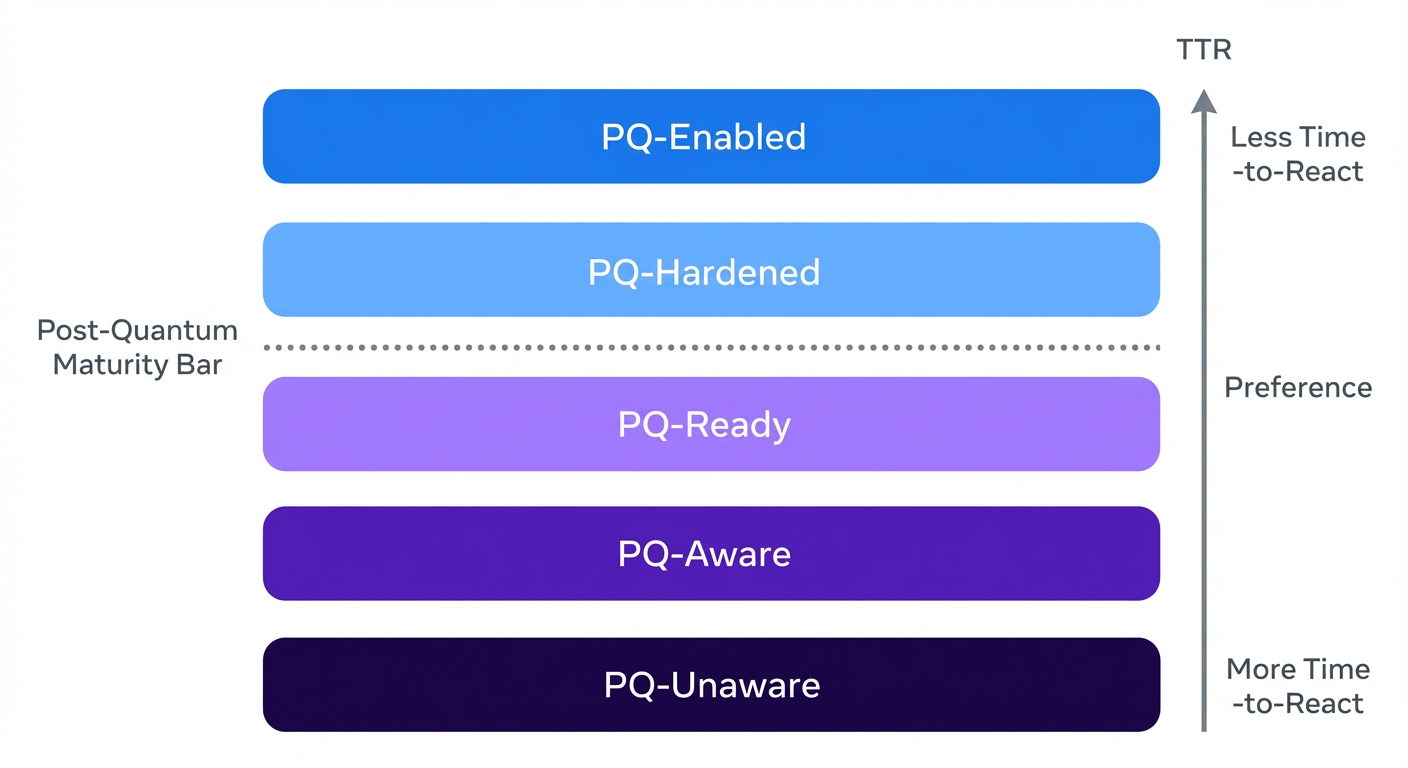
What are PQC Migration Levels, and how do they simplify the process?
PQC Migration Levels are a concept Meta developed to help teams manage the complexity of transitioning to post‑quantum cryptography. Instead of a one‑size‑fits‑all approach, these levels define progressive stages of readiness. Level 0 means no PQC support; Level 1 involves basic awareness and inventory; Level 2 includes testing new algorithms in non‑critical systems; Level 3 rolls out PQC in production with careful monitoring; and Level 4 achieves full‑scale deployment with automated guardrails. This tiered structure allows different teams within Meta—each with different risk profiles and technical environments—to migrate at their own pace while maintaining overall security goals. It also provides a clear communication tool: when a team says they are at Level 2, everyone understands the scope of work and expected security posture. The levels align with industry best practices and help break down a daunting migration into concrete, achievable milestones. For more on the algorithms Meta uses, see NIST standards and Meta’s contributions.
Which post‑quantum standards have been published, and how is Meta contributing?
The National Institute of Standards and Technology (NIST) has finalized the first post‑quantum cryptography standards: ML‑KEM (formerly Kyber) for key encapsulation and ML‑DSA (Dilithium) for digital signatures. An additional algorithm, HQC, was recently selected; notably, Meta cryptographers are co‑authors of HQC, reflecting the company’s commitment to advancing global cryptographic security. These standards provide robust defenses against SNDL attacks. Meta is actively deploying ML‑KEM and ML‑DSA across its internal infrastructure, while also contributing to further algorithm development. By participating in the standards process, Meta helps ensure that the adopted algorithms are practical for real‑world, large‑scale systems. The company’s experience feeds back into the community, influencing both the standards and migration best practices. Organizations can confidently adopt these NIST‑approved algorithms as a foundation for their own PQC journey. For practical advice on starting your migration, see Meta’s lessons and takeaways.
What are the biggest challenges in PQC migration, and how does Meta overcome them?
Meta identifies several key challenges: incomplete technical capabilities, complexity of large‑scale systems, and the need for backward compatibility. Many existing cryptographic APIs and hardware do not yet support PQC algorithms, requiring updates across stacks. To address this, Meta employs a dual‑stack approach—running both classical and post‑quantum cryptography side by side—while gradually phasing out older algorithms. Another challenge is inventory accuracy: mapping every use of cryptography across a massive infrastructure is difficult. Meta uses automation and specialized tools to maintain a living inventory. Additionally, the performance overhead of new algorithms can impact latency; Meta optimizes by selecting the right algorithm for each use case and by leveraging hardware acceleration where available. Finally, organizational alignment is critical. Meta’s PQC Migration Levels help different teams coordinate and prioritize. Regular cross‑team reviews and shared roadmaps keep everyone moving forward. For a summary of Meta’s overall guidance, see the key takeaways.
What practical advice does Meta offer to other organizations starting their PQC journey?
Meta encourages organizations to start now, even if quantum computers are years away. Small steps—like inventorying cryptographic assets and identifying high‑risk data—can dramatically reduce future effort. Adopt a phased approach using frameworks like PQC Migration Levels to manage complexity. Prioritize systems that handle long‑lived sensitive data, as these are most vulnerable to SNDL attacks. Engage with standards bodies and stay informed about algorithm updates. Meta also recommends building cryptographic agility: design systems so that algorithms can be swapped without major redesign. Finally, collaborate with the broader community—sharing lessons and tools accelerates everyone’s progress. Meta’s own migration, though tailored to its scale, offers principles that apply to any organization: clear risk assessment, incremental deployment, and continuous monitoring. By following these practices, enterprises can navigate the transition efficiently and economically, safeguarding their data for the quantum age.